
What if every bug report came with root cause attached?
Most alert queues are full of duplicates, expired assumptions, and evidence-free mysteries. The useful AI workflow is not just RCA. It is hypothesis validation all the way to a proven fix.
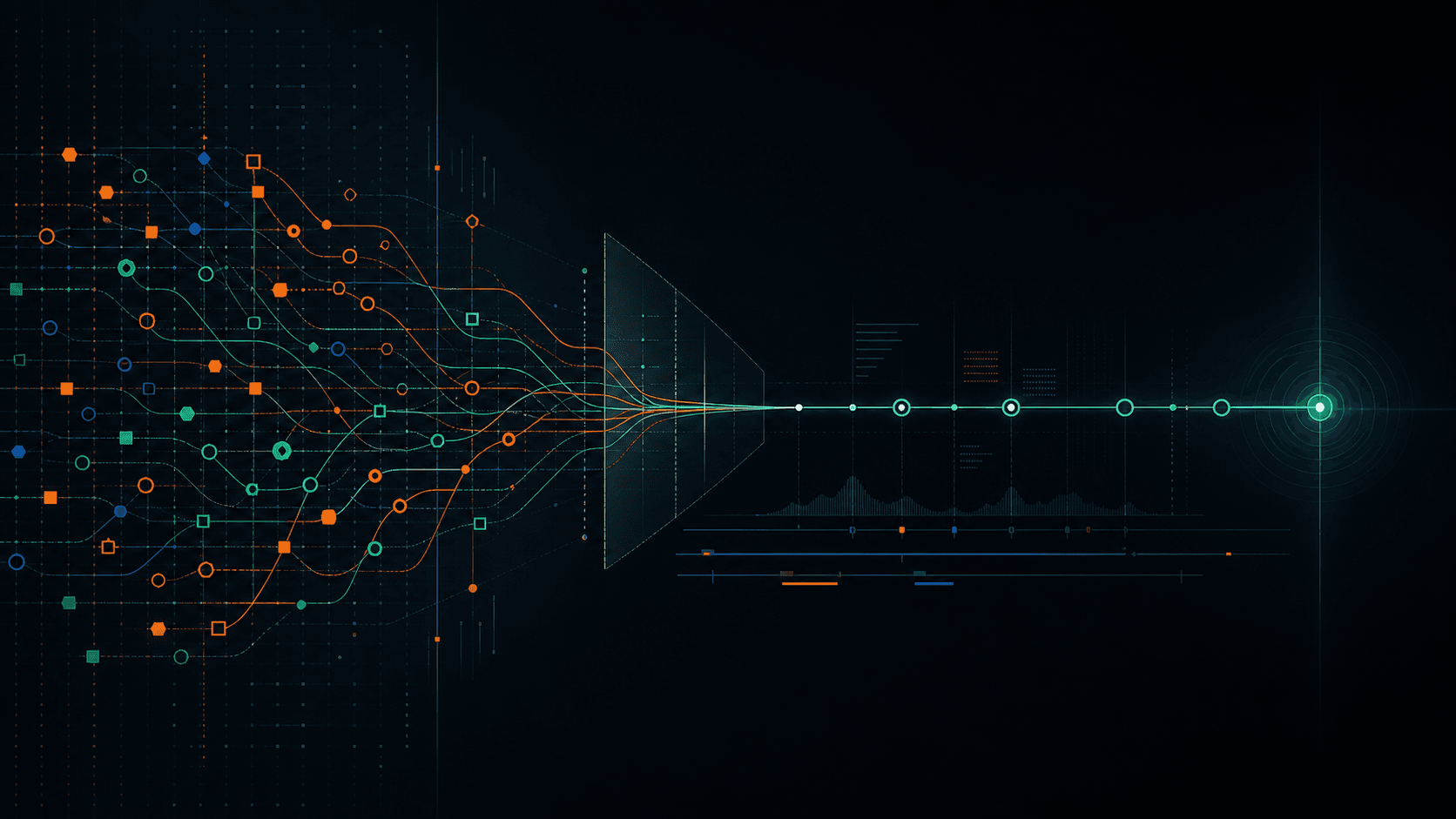
Most alert queues are not queues of bugs.
They are queues of symptoms.
When an alert fires, engineers usually get just enough information to know that something is wrong, but not enough information to know what happened. The real work starts after the page: logs, metrics, traces, dashboards, deploy history, issue comments, Slack threads, and whatever tribal knowledge the last incident left behind.
That is not debugging yet. That is context assembly.
Engineers already know the shape of this pain. If a bug investigation takes 10 hours, something like 7 of those hours are often spent assembling context. Not thinking. Not fixing. Just gathering enough evidence to make a real hypothesis.
And the part that makes alert queues especially exhausting is that many alerts are not distinct, actionable bugs.
why alerts are hard to act on
More than half of a typical alert queue can fall into three categories that waste engineering attention.
1. duplicates
One underlying bug can trigger dozens of alerts: downtime, HTTP 4xx and 5xx spikes, latency regressions, queue depth changes, retry storms, customer-facing errors, and synthetic check failures.
Each alert looks different. Each one has its own metric, trace, log snippet, or dashboard panel. But they all point to the same root cause.
Without grouping, engineers investigate the same bug through five different lenses.
2. misconfigured alerts
SREs configure alerts based on how they expect the system to behave. Developers change the system based on their own assumptions. Those two models drift.
The result is an alert that fires when nothing is actually wrong. The threshold is stale. The service changed shape. A rollout made the old alert definition meaningless. The alert is not malicious. It is just expired.
3. missing evidence
Sometimes the alert was real, but the evidence is gone by the time someone investigates.
The container restarted. A job cleaned up the logs. Traces aged out. The failing pod was replaced. The request that mattered was never sampled. The oncall engineer is left staring at silence, trying to reconstruct a bug from the absence of data.
That is not a root-cause problem. It is an evidence-retention problem.
the actionability test
A useful alert workflow should answer three questions before it asks a human to spend an hour digging.
| Alert pattern | What engineers see | What useful automation should do |
|---|---|---|
| Duplicate storm | Many alerts with different symptoms | Cluster them, pick a canonical alert, and preserve the linked evidence |
| Misconfigured alert | Alert fires but behavior is expected | Explain which assumption changed and why the alert definition is stale |
| Missing evidence | Real symptom, no recoverable context | Say what evidence is unavailable and why the investigation cannot be completed confidently |
| Real bug | Symptom has code, trace, log, or deploy evidence | Form hypotheses, validate them, reproduce the failure, and prove the fix |
The last row is the important one.
Root cause analysis is useful, but it is not the finish line. A diagnosis without validation still leaves the developer with the riskiest part of the work.
what an AI agent should say
Imagine an agent looking at your 15 open alerts and saying:
- These 9 are duplicates of alert #3. Investigate this canonical alert first.
- This one is misconfigured. A recent commit changed the expected behavior.
- These 2 have no recoverable evidence. Here is the missing data and why it matters.
- These 3 are likely real bugs. Here are the ranked hypotheses and the evidence for each.
For the real bug, the agent should not stop at "here are the logs."
It should understand the codebase. It should trace the failing request. It should form a concrete hypothesis, such as "the database was mid-migration when this request hit the old read path." Then it should validate that hypothesis against the evidence.
If the hypothesis survives, the workflow should keep going:
- Generate a reproduction test case.
- Propose a minimal fix.
- Run the reproduction against the broken code.
- Run it again against the fixed code.
- Leave a reviewable evidence trail.
That is the hypothesis validation loop.
why RCA alone is too small
A lot of AI SRE tooling stops at diagnosis. A bot summarizes an incident, posts a likely root cause, and hands the rest back to the engineer.
That is useful, but it is not enough.
The expensive part of debugging is not only naming the likely cause. It is proving that the cause explains the symptom, proving that the proposed fix removes the failure, and proving that the patch did not change unrelated behavior.
An RCA note can still be wrong. A validated reproduction is much harder to hand-wave.
the SRE and developer gap
The gap between SRE and developer work has always been a productivity killer.
SREs see the symptom first. Developers usually own the code that needs to change. The context lives between them: dashboards, traces, deploy metadata, customer reports, comments, screenshots, log windows, and commit history.
The right agent has to bridge that gap. It cannot be just another observability dashboard. It cannot be just another alert aggregator. It has to work through the evidence, the codebase, and the IDE until the bug is actually fixed.
That is what we are building.
Not alert noise with a nicer summary.
An AI debugging workflow that starts when the alert fires and keeps going until there is a validated fix.
two questions
I am especially interested in two questions:
- How much time does your team usually spend identifying root cause before anyone writes the fix?
- If every bug report included a validated root cause, what would that change about your team's productivity?