
FixBugs for VS Code — Debug, Don't Just Autocomplete
A debugging extension that lives next to Copilot and Cursor, but solves a different problem: what's broken, and why.
Most AI extensions in your editor are coding agents. They watch your cursor, predict the next token, and generate the file you were about to write. That is useful — and it is not the problem you have at 2am.
At 2am you are not writing new code. You are staring at a Grafana panel, a Jaeger trace, a Sentry error group, and a Jira ticket a customer filed thirty minutes ago. The bug is nowhere near your cursor. The bug is distributed across five tools, three services, and a deploy that shipped forty minutes before the alert.
FixBugs for VS Code is a debugging extension, not a coding extension. It installs next to Copilot and Cursor, but it lives where debugging actually happens — inside the loop between an incoming issue, the logs and traces that explain it, and the diff that removes it.
The full pipeline
From ingestion to PR -- every step automated.
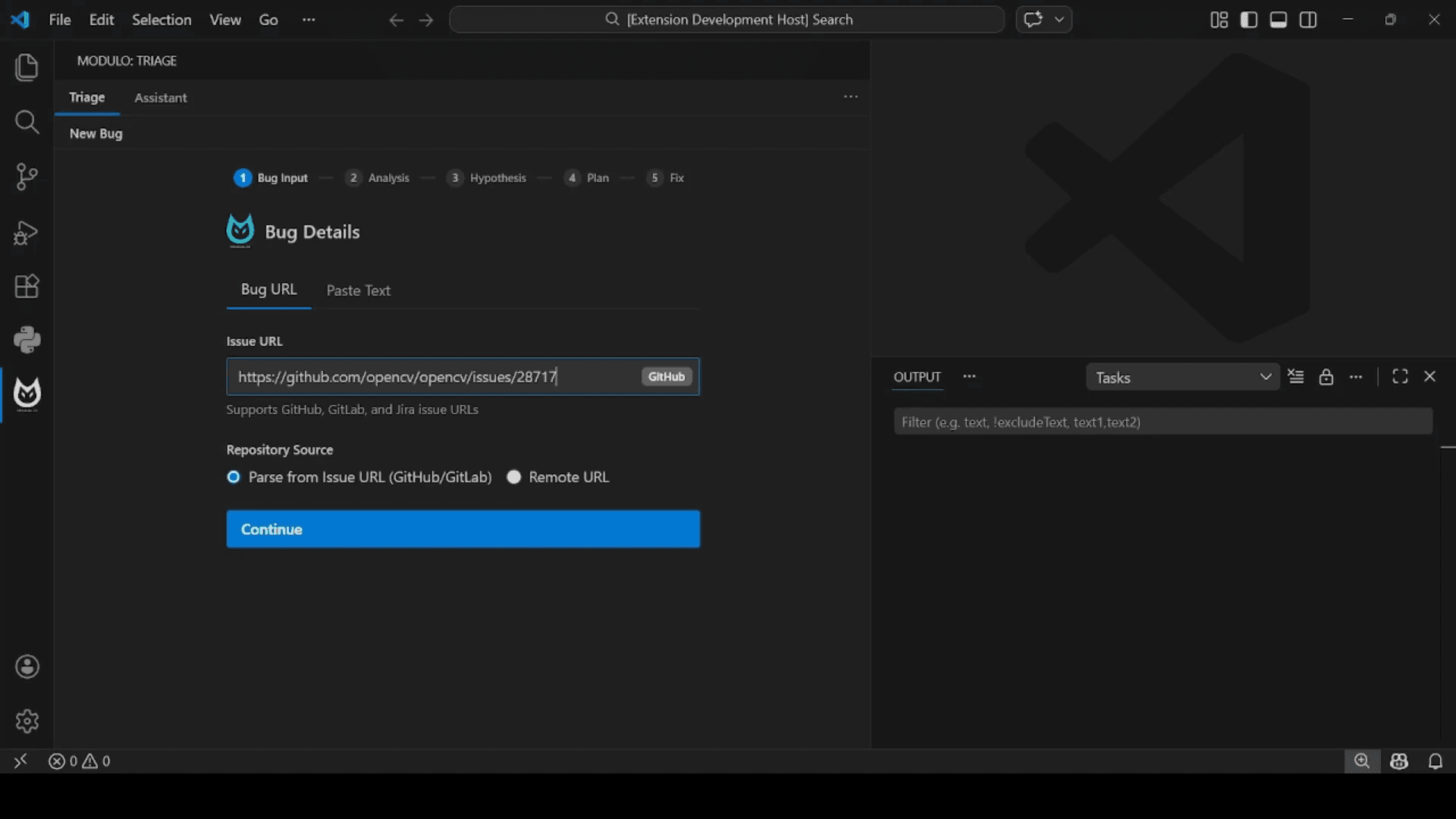
Multi-Source Triage
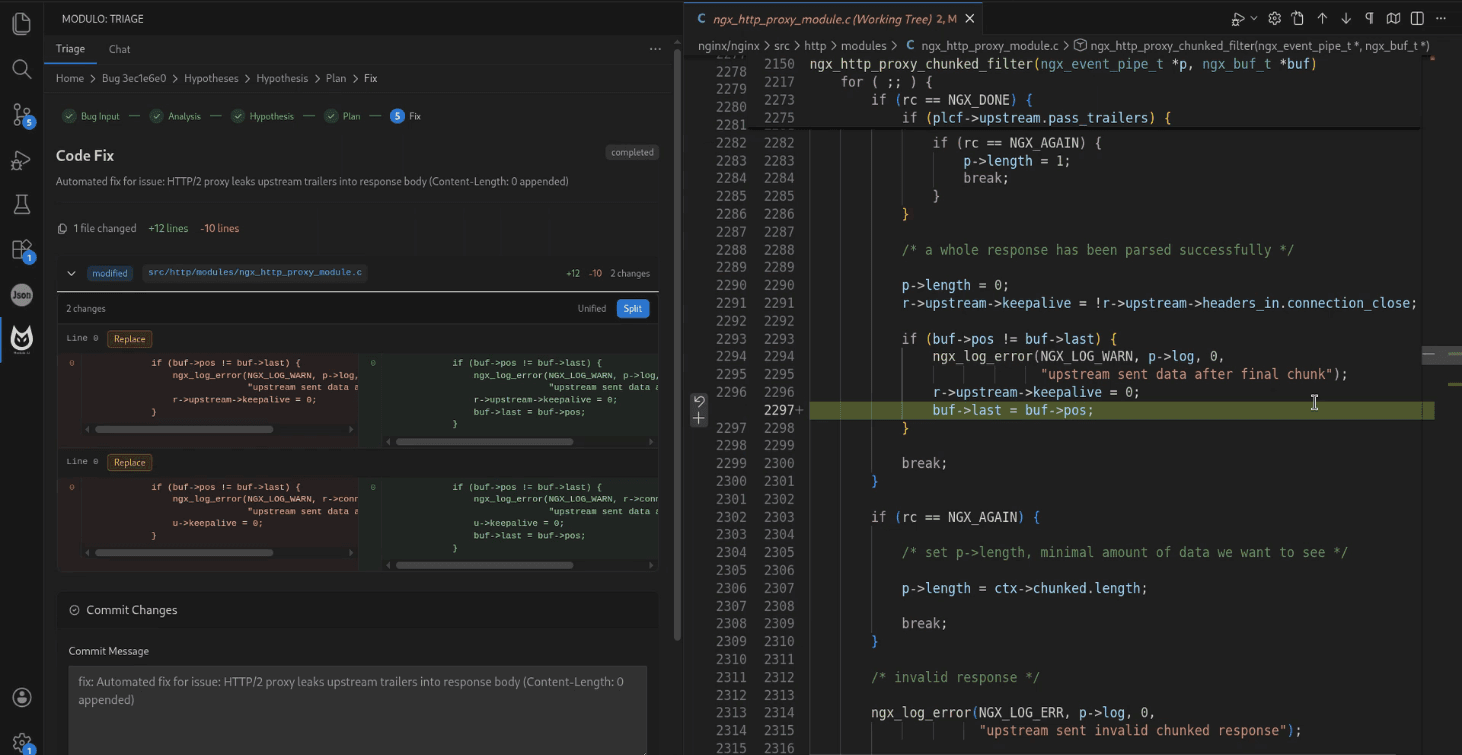
GitHub, GitLab, Jira, or plain text. 5-step workflow breadcrumbs: Bug Input > Analysis > Hypothesis > Plan > Fix.
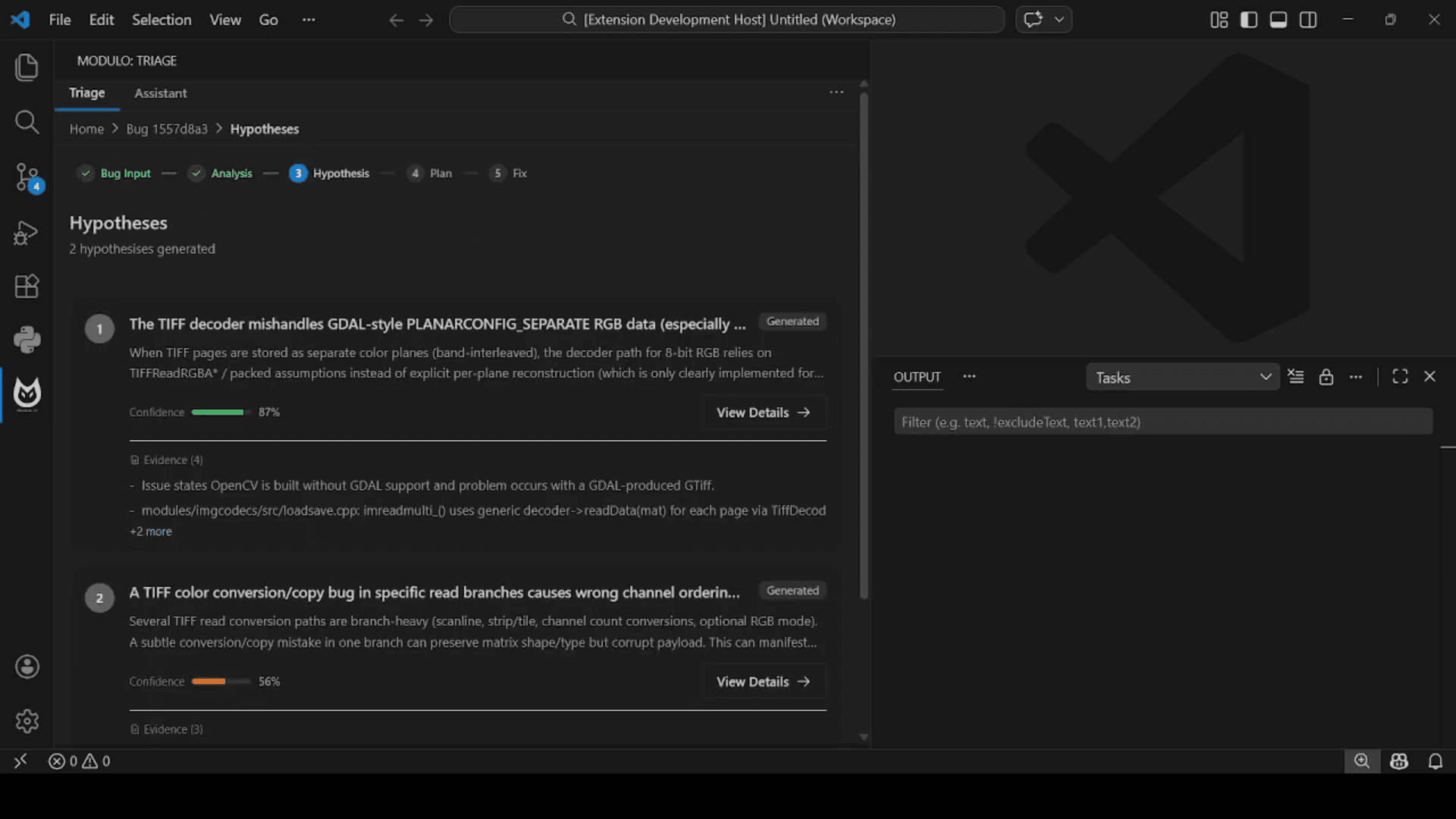
Hypothesis Generation
Multiple competing root causes with confidence scores and evidence.
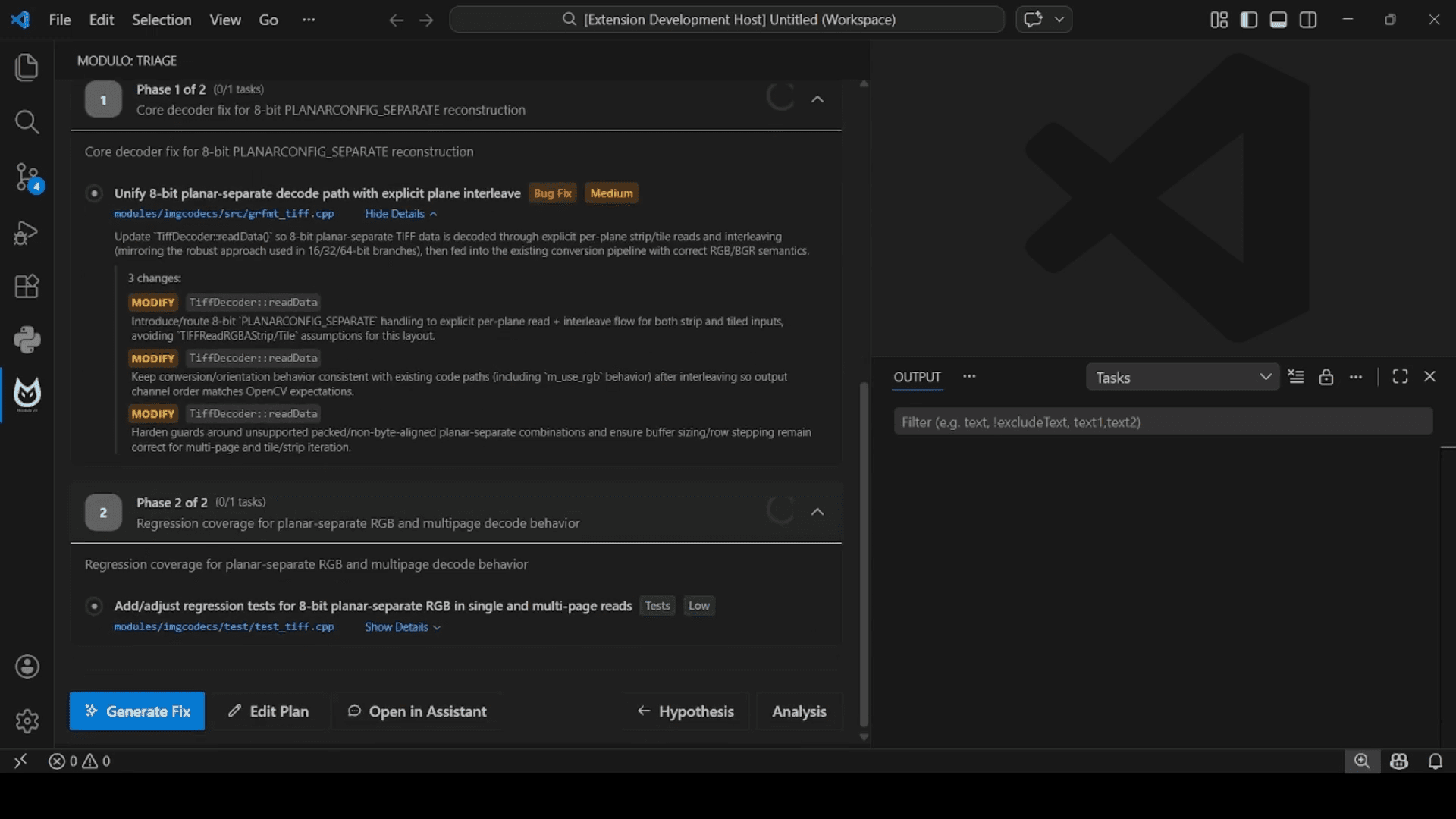
Fix Planning
Split-view plans: affected files + source code side by side.
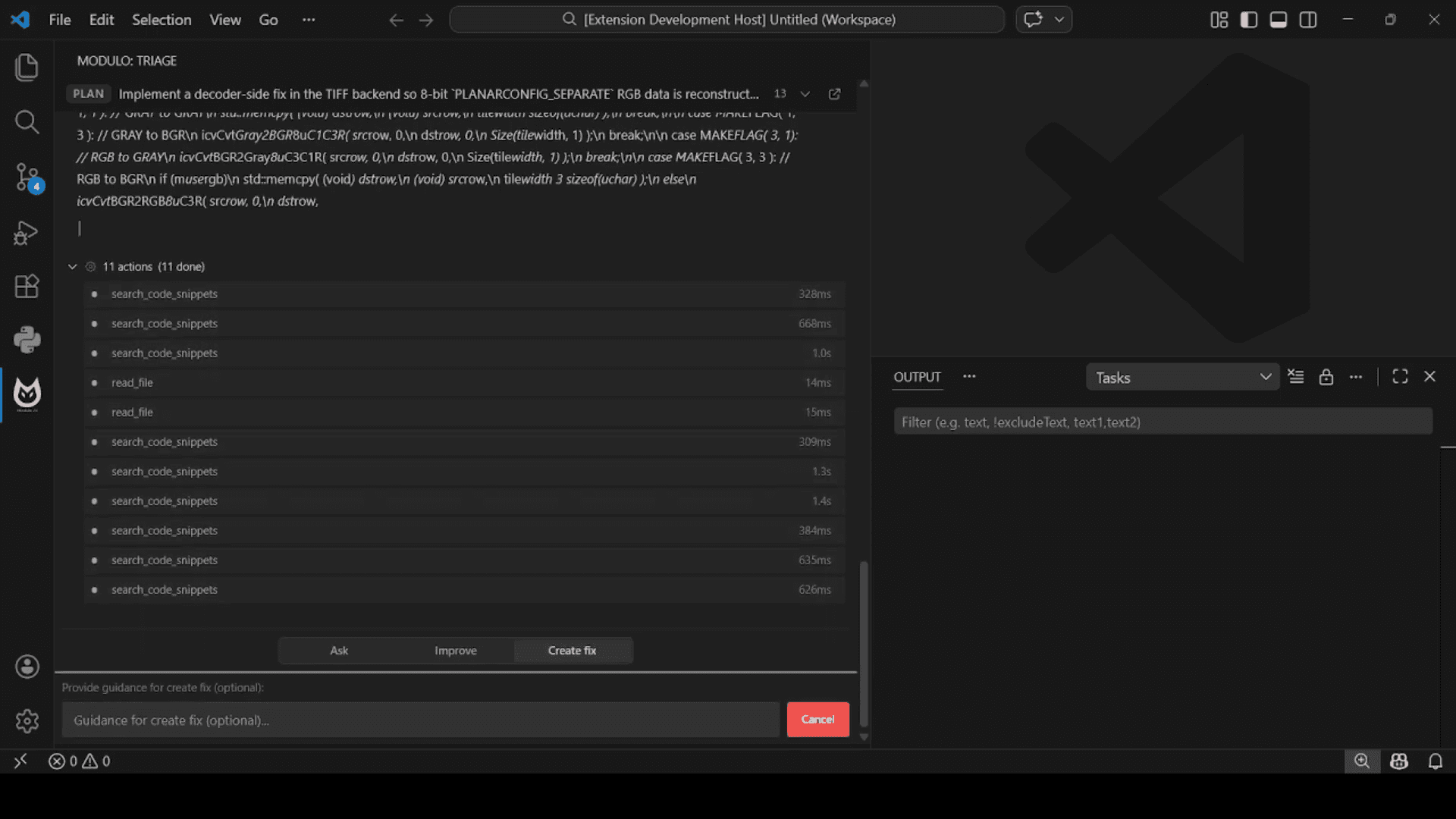
AI Chat
Ask questions. The agent runs tool calls (search, read, find) and reasons with full code context.
Generated Diffs
Review diffs hunk-by-hunk. Green additions, red removals. Accept or reject inline.
What it does for you
Five things you get the moment you open the extension on a real bug.
One-click triage from wherever the bug lives
Paste a Jira ticket URL, a GitHub or GitLab issue link, a Sentry error, or a raw stack trace into the extension. FixBugs pulls the whole thing — title, body, comments, attachments, linked PRs, stack frames — and starts investigating.
You don't assemble context. You describe the symptom; the extension goes and gets the evidence.
Competing hypotheses, ranked by evidence
Coding agents pick the most likely root cause and retry until something compiles. In real debugging, the most visible issue is often not the correct one.
FixBugs produces two or three competing hypotheses with confidence scores and evidence links — which log lines, which traces, which commits point at which cause. You pick the one worth pursuing or refine one before anything gets written.
Fixes generated as reviewable diffs, with rationale
When the extension has a direction, it produces a diff — hunk by hunk, green additions, red removals — along with a written explanation of why the change resolves the hypothesis.
You accept or reject at the hunk level, regenerate inline, or push back in chat. Nothing lands in your branch you didn't look at.
Every fix ships with a reproduction test
This is the part most AI coding tools skip. FixBugs writes a test that fails on the broken code, passes on the proposed fix, and leaves the rest of the suite green.
If the agent can't produce that evidence, the fix doesn't ship. More on this below — it's the single biggest reason to install this over yet another coding agent.
A stateful conversation you can rewind
Triage is not linear. When the agent commits to a wrong hypothesis or patches a symptom instead of the cause, you rewind to the last good point and branch.
Your conversation, the evidence it gathered, the plans it drafted — all versioned, all reachable. Most chat-based tools silently accumulate a biased context and make you start over. This one lets you walk backward.
Where it gets its context
You don't paste evidence into a chat window. The agent goes and collects it.
The reason most AI tools are bad at debugging is not that they reason poorly. It's that they never see the right evidence. Debugging a production bug from inside an editor is like diagnosing a patient by reading the furniture in their apartment.
FixBugs reaches out. The extension connects to the telemetry your team already runs — OpenTelemetry pipelines, Jaeger traces, Datadog logs and metrics, Sentry error groups, New Relic dashboards, Elastic APM. It reads your issue tracker: GitHub, GitLab, Jira, Linear. It reads your repository — commit history, open PRs, recent deploys, the blame graph of the suspect files. And when a human has attached a screenshot or a screen recording to the ticket, the extension reads those too.
When you want to know why it believes what it believes, the citations are right there.
Why validated fixes matter
Most AI coding tools produce a diff and a vibe. That’s the gap.
Sometimes the diff looks right. Sometimes it compiles. Whether it actually fixes the bug — whether the thing that was broken is now not broken — is your problem. You run the code. You trace it by hand. You hope.
FixBugs treats that as a product failure, not a user responsibility. Every proposed fix ships with a reproduction test: a test that fails on the broken code, passes on the fix, and leaves the rest of the suite green. If the agent cannot produce that test — cannot reproduce the bug, cannot show its fix removes the symptom — the fix is not offered as a fix. It's offered as a draft that needs more work.
The gap between “here is a plausible patch” and “here is evidence the patch resolves the hypothesis we named” is the gap between shipping and not shipping on Friday afternoon.
Continuous bugfixing — the missing rung
CI for code. CD for releases. Continuous monitoring for production. What do you have for bugs?
For most teams, the answer is: a queue, a triage rotation, and hope. A customer files a ticket. It sits. The oncall engineer picks it up between alerts. Context gets lost in handoffs. Three weeks later, someone closes it “won't fix.”
FixBugs is the missing rung in the CI/CD ladder. A bug arrives from any surface — alert, ticket, stack trace. A triage session spins up. Context is gathered, hypotheses are ranked, a fix is drafted, a reproduction test is written, a PR is opened. Every step is observable; every artifact is versioned; nothing waits on a human to assemble the evidence before work can begin.
This isn't a pager-duty replacement. You still decide what ships. But the drudgery between “alert fires” and “diff is reviewable” collapses. The engineer shows up to a triage session that already did its homework.
Start free. Scale when you’re ready.
Three bug fixes free to try the extension. Paid and Enterprise tiers when your team needs more.
Free Trial
$0
3 bug fixes per month
Get started with FixBugs at no cost. No credit card needed.
Pro
$33/mo
15 bug fixes per month
Advanced debugging for developers who need flexibility at scale.
Super User
$60/mo
30 bug fixes per month
Advanced debugging capacity for teams operating at scale.
Enterprise
Custom
Custom bug fix volume
Advanced incident management for enterprise-wide deployment.
Frequently asked questions
Point the extension at a real bug.
Free trial: 3 bug fixes per month, no credit card. See whether the hypotheses it produces match the ones you were already suspecting — or whether it finds something you missed.